Sound is not just something you hear. It is vibration — physical waves that move through air, water, and solid matter, including the tissues and fluids of your body. Every sound has a frequency, measured in Hertz (Hz), which describes how many times per second the wave oscillates. And the idea that specific frequencies can influence health, mood, and consciousness is not new. It is thousands of years old, spanning Gregorian chants, Tibetan singing bowls, Aboriginal didgeridoos, and Indian ragas designed to evoke specific emotional and physiological states.
In recent years, the concept of "healing frequencies" has gained enormous popular interest — and with it, a mixture of genuine insight, reasonable science, and considerable overstatement. This guide provides a thorough, balanced exploration of what healing frequencies are, what the evidence says about them, and how to use them practically.
What Is Frequency Healing?
Frequency healing is the practice of using specific sound frequencies to support physical, emotional, and mental wellbeing. The underlying principle is that the human body is not a static structure but a dynamic system of vibrations — every organ, tissue, and cell vibrates at its own characteristic frequency, and health depends on these vibrations maintaining their natural coherence.
When the body's natural frequencies become disrupted — through stress, illness, injury, or environmental factors — symptoms emerge. Frequency healing proposes that exposing the body to specific therapeutic frequencies can help restore its natural vibratory state, supporting the conditions in which healing occurs.
This concept is called resonance — the tendency of a vibrating system to respond to an external vibration that matches its natural frequency. It is a well-established principle in physics. A tuning fork struck near another tuning fork of the same pitch will cause the second fork to vibrate. The question that frequency healing raises is whether biological systems respond to external frequencies in a therapeutically meaningful way.
The evidence says: sometimes yes, depending on the specific claim being made and the quality of the evidence supporting it.
The Solfeggio Frequencies
Experience Scalar Energy for Free
Start your 6-day remote scalar energy trial — no payment, no commitment.
Start My Free 6-Day Trial →The most widely discussed healing frequencies are the solfeggio frequencies — a set of tones that have become central to the modern frequency healing movement. Their origin story involves a combination of historical fact and modern interpretation.
The term "solfeggio" refers to the medieval system of musical notation (do-re-mi-fa-sol-la) used in Gregorian chanting. In the 1970s, Dr. Joseph Puleo, a naturopathic physician, claimed to have rediscovered a set of six core frequencies embedded in the biblical Book of Numbers using numerological analysis. These were later expanded to nine frequencies by other researchers and practitioners.
Whether or not you find the origin story compelling, the frequencies themselves have been adopted by a large community of practitioners and users who report therapeutic benefits. Here is a detailed examination of each.
174 Hz — The Foundation Frequency
Associated with: Pain relief, physical relaxation, sense of security
174 Hz is the lowest of the solfeggio frequencies and is described as a natural anesthetic. It is associated with reducing physical pain and creating a sense of safety and security in the body.
How it is used: People listen to 174 Hz tones during periods of physical discomfort, after injury, or when seeking deep physical relaxation. It is often used as a starting point in frequency healing sessions, providing a grounding foundation before moving to higher frequencies.
What the evidence suggests: There is limited research specifically on 174 Hz. The general principle that low-frequency sound can produce physical relaxation and pain modulation has some support — low-frequency vibration therapy has been studied for pain management in clinical settings, with some positive results. However, attributing specific therapeutic properties to precisely 174 Hz versus other nearby frequencies is not supported by rigorous evidence.
285 Hz — The Restoration Frequency
Associated with: Tissue healing, cellular regeneration, restoring the body to its original form
285 Hz is described as a frequency that supports the body in healing and regenerating damaged tissues. It is associated with the body's natural recovery processes and is sometimes recommended for use after surgery or injury.
How it is used: Practitioners recommend listening to 285 Hz during recovery periods, before sleep (when the body does most of its repair work), or as part of a broader frequency healing protocol.
What the evidence suggests: The specific claim that 285 Hz accelerates tissue regeneration has not been validated in clinical trials. However, the broader field of low-intensity pulsed ultrasound (LIPUS) — which uses sound waves to promote tissue healing — is an established area of medical research with FDA-cleared applications in bone fracture healing. The principle that sound frequencies can influence cellular behavior is not fringe science; the question is whether 285 Hz specifically has the properties attributed to it.
396 Hz — The Liberation Frequency
Associated with: Releasing fear and guilt, liberating from negative patterns, emotional grounding
396 Hz is described as a frequency that helps dissolve feelings of fear, guilt, and grief — emotions that are understood to create energetic blockages in the body, particularly in the root and sacral energy centers.
How it is used: People listen to 396 Hz during meditation focused on releasing negative emotional patterns, during journaling or therapy processing, or as background during introspective work.
What the evidence suggests: The specific therapeutic properties of 396 Hz have not been studied in isolation. However, the use of specific musical tones to influence emotional states is well-documented in music therapy research. The broader principle — that sound can modulate emotional experience — is well-established, even if the specific frequency-emotion correspondences in solfeggio theory remain traditional rather than empirically validated.
417 Hz — The Change Frequency
Associated with: Facilitating change, clearing traumatic experiences, undoing negative situations
417 Hz is described as a frequency that supports positive change and helps clear the energetic residue of past negative experiences. It is associated with breaking destructive patterns and creating space for new possibilities.
How it is used: Practitioners recommend 417 Hz during periods of transition — changing jobs, ending relationships, moving through grief, or trying to break habitual patterns. It is also used in meditation practices focused on transformation.
What the evidence suggests: As with other individual solfeggio frequencies, specific research on 417 Hz is very limited. The experience of feeling supported through change while listening to specific musical tones is widely reported but difficult to separate from the effects of relaxation, focused attention, and positive expectation that accompany any intentional healing practice.
528 Hz — The Love Frequency (or Miracle Frequency)
Associated with: DNA repair, transformation, love, miracles, restoration
528 Hz is by far the most famous and most heavily promoted of the solfeggio frequencies. It is sometimes called the "miracle frequency" or the "love frequency" and has generated more discussion, research, and controversy than any other healing frequency.
The claim that receives the most attention is that 528 Hz can repair damaged DNA. This claim traces primarily to a 1998 study by biochemist Glen Rein, who exposed DNA samples in test tubes to different types of music and reported that music with a 528 Hz component produced a measurably different effect on DNA unwinding compared to other frequencies.
How it is used: 528 Hz is used in meditation, played as background music, incorporated into sound healing sessions, and embedded in countless YouTube videos and streaming playlists marketed for healing purposes. Some practitioners tune their instruments to A=444 Hz (rather than the standard A=440 Hz) so that the note C in that tuning system vibrates at 528 Hz.
What the evidence suggests: The Rein study is real but has significant limitations — it was a small in-vitro experiment (test tube, not living organisms), it has not been independently replicated at scale, and the leap from "affects DNA in a test tube" to "repairs DNA in a living human body" is enormous. A 2018 study published in the Journal of Addiction Research and Therapy found that 528 Hz music reduced anxiety in participants more than standard 440 Hz music, which is an interesting finding but a long way from validating DNA repair claims.
The honest assessment is that 528 Hz may have relaxation and mood-enhancing effects, but the most dramatic claims made about it significantly exceed the available evidence.
639 Hz — The Connection Frequency
Associated with: Harmonizing relationships, communication, understanding, tolerance, love
639 Hz is described as a frequency that supports interpersonal harmony, empathy, and the ability to connect meaningfully with others. It is associated with the heart chakra and with emotional intelligence.
How it is used: People listen to 639 Hz before or during difficult conversations, when working on relationship challenges, during couples therapy homework, or during meditation focused on forgiveness and compassion.
What the evidence suggests: Specific research on 639 Hz is essentially nonexistent. The broader principle that music influences social bonding and emotional connectivity is well-supported — communal music-making increases oxytocin release, and specific musical characteristics (tempo, harmony, mode) measurably affect emotional states. Whether 639 Hz specifically has relationship-enhancing properties beyond general musical effects is an open question.
741 Hz — The Expression Frequency
Associated with: Self-expression, problem-solving, mental clarity, detoxification
741 Hz is described as a frequency that supports clear thinking, authentic self-expression, and the ability to see through deception or confusion. It is associated with the throat chakra and is sometimes recommended for creative blocks.
How it is used: Practitioners recommend 741 Hz for writing sessions, creative work, studying, decision-making, or any situation requiring mental clarity and honest expression.
What the evidence suggests: No specific clinical research validates the properties attributed to 741 Hz. However, the use of specific sound environments to enhance focus and cognitive performance is an active area of research, with some studies suggesting that certain ambient sound characteristics can improve concentration and creative output.
852 Hz — The Intuition Frequency
Associated with: Awakening intuition, returning to spiritual order, heightened awareness
852 Hz is described as a frequency that supports inner perception, pattern recognition, and connection to intuitive knowledge. It is associated with the third eye chakra.
How it is used: People listen to 852 Hz during meditation focused on insight and intuition, during contemplative practices, or when seeking clarity about complex decisions that resist purely rational analysis.
What the evidence suggests: As with other higher solfeggio frequencies, specific research is minimal. The meditative and contemplative states that people seek through this frequency are well-studied in their own right — meditation research consistently shows changes in brainwave patterns, attention, and perceptual sensitivity — but whether 852 Hz specifically facilitates these states more effectively than other frequencies is undemonstrated.
963 Hz — The Divine Frequency
Associated with: Connection to higher consciousness, unity, awakening, cosmic awareness
963 Hz is the highest of the extended solfeggio set and is described as supporting connection to the highest states of consciousness. It is associated with the crown chakra and with the pineal gland.
How it is used: This frequency is used in deep meditation, spiritual practice, and contemplative traditions. It is sometimes recommended for people exploring consciousness practices or seeking a deeper sense of meaning and connection.
What the evidence suggests: No specific clinical research supports the properties attributed to 963 Hz. The frequency falls within the audible range and can certainly be perceived, but its specific effects on consciousness remain in the domain of traditional and experiential knowledge rather than empirical validation.
The Schumann Resonance: 7.83 Hz
Beyond the solfeggio set, one frequency deserves special attention: the Schumann resonance at approximately 7.83 Hz. Unlike the solfeggio frequencies, which have traditional and numerological origins, the Schumann resonance has a clear scientific basis.
Discovered by physicist Winfried Otto Schumann in 1952, the Schumann resonance is the electromagnetic frequency generated by lightning activity between the Earth's surface and the ionosphere. It is, in essence, the Earth's own electromagnetic "heartbeat."
What makes 7.83 Hz particularly interesting from a healing perspective is that it falls within the alpha brainwave range (8-12 Hz) — the frequency band associated with relaxed alertness, calm focus, and the meditative state. Some researchers have proposed that human biology evolved in synchrony with this natural electromagnetic frequency and that modern life — with its artificial electromagnetic fields, indoor environments, and separation from the natural world — disrupts this synchronization.
Research on the Schumann resonance and human health is limited but suggestive. Studies have reported correlations between variations in Schumann resonance intensity and hospital admission rates, blood pressure changes, and melatonin production. These findings are preliminary and should be interpreted cautiously, but they point to a plausible mechanism by which natural electromagnetic frequencies could influence human physiology.
The relevance to frequency healing is clear: if the body's systems evolved to operate in resonance with specific natural frequencies, then exposure to those frequencies — or to artificial fields that mimic them — could theoretically support biological coherence and health.
Binaural Beats: Engineered Frequency Healing
Binaural beats represent a different approach to frequency-based wellness. Rather than playing a single frequency, binaural beats work by playing two slightly different frequencies in each ear through headphones. The brain perceives the difference between the two frequencies as a third, internal "beat" — and this perceived beat can influence brainwave patterns through a process called frequency following response.
For example, if you hear 200 Hz in one ear and 210 Hz in the other, your brain perceives a 10 Hz binaural beat — which falls in the alpha brainwave range associated with relaxation and calm alertness.
Common binaural beat ranges:
| Frequency Range | Brainwave State | Associated With |
|---|---|---|
| 0.5 - 4 Hz (Delta) | Deep sleep | Rest, recovery, healing |
| 4 - 8 Hz (Theta) | Deep relaxation | Meditation, creativity, dream states |
| 8 - 13 Hz (Alpha) | Calm alertness | Relaxation, learning, focus |
| 13 - 30 Hz (Beta) | Active thinking | Concentration, problem-solving |
| 30 - 100 Hz (Gamma) | Peak performance | Higher cognition, insight |
What the evidence says: Binaural beats have more research support than the solfeggio frequencies. A 2019 meta-analysis published in Psychological Research found that binaural beats had a small but statistically significant effect on anxiety reduction. Other studies have reported effects on pain perception, focus, and sleep quality. The effects tend to be modest and variable between individuals, but the underlying mechanism (frequency following response) is well-established in auditory neuroscience.
How to Use Healing Frequencies: A Practical Guide
If you want to explore frequency healing, here are practical guidelines based on practitioner experience and the available evidence:
Equipment
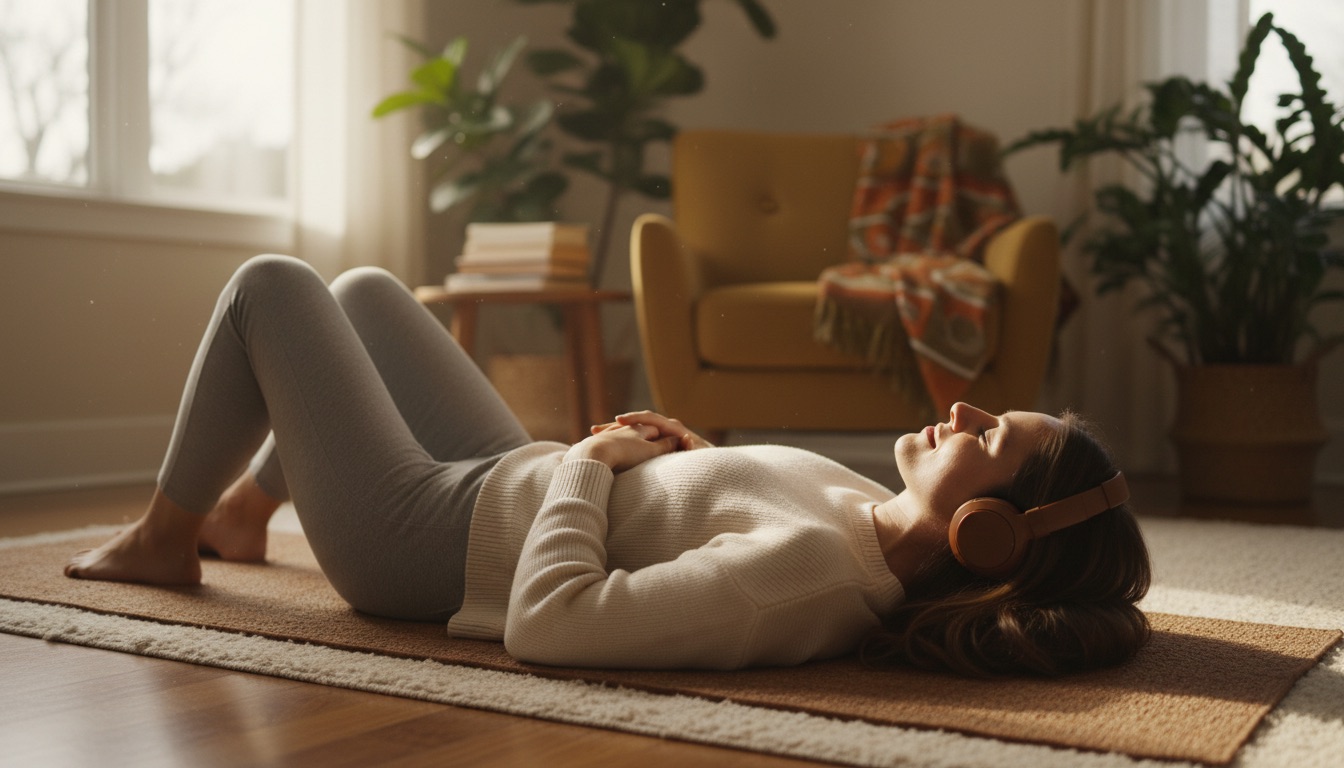
- Headphones are required for binaural beats (the two different frequencies must be delivered separately to each ear). High-quality, comfortable headphones that you can wear for extended periods are ideal.
- Speakers work fine for solfeggio frequencies and single-tone listening. Some practitioners prefer speakers because they allow the sound to move through the body rather than being directed only to the ears.
- Volume should be comfortable — loud enough to hear clearly but not so loud as to cause discomfort. Many people listen at low background levels.
Apps and Platforms
Numerous apps and platforms offer healing frequency content:
- YouTube has extensive free content — search for specific frequencies (e.g., "528 Hz meditation," "binaural beats for sleep")
- Dedicated apps like Brain.fm, MyNoise, and Insight Timer offer curated frequency-based audio
- Streaming platforms (Spotify, Apple Music) have playlists organized by frequency
Best Practices
- Start with one frequency rather than trying multiple frequencies simultaneously. Notice your response before moving on.
- Create a quiet, comfortable environment. Frequency healing works best when you can relax and focus your attention.
- Sessions of 15-30 minutes are a good starting point. Increase duration based on your response.
- Be consistent. Daily practice tends to produce more noticeable results than occasional sessions.
- Combine with other practices. Frequencies pair well with meditation, breathwork, yoga, and other energy healing practices.
- Track your experience. Note your mood, energy, sleep quality, and any physical sensations before and after sessions. This helps you identify which frequencies work best for you.
- Stay hydrated. Many practitioners recommend drinking water before and after frequency sessions.
Scientific Evidence and Criticism: An Honest Assessment
The frequency healing field exists on a spectrum from well-supported to highly speculative:
Well-supported: Sound affects the body. This is not controversial. Music therapy is a recognized clinical discipline with decades of research. Specific sound parameters measurably influence heart rate, respiratory rate, cortisol levels, blood pressure, and brainwave patterns. Vibroacoustic therapy — using low-frequency sound vibrations applied directly to the body — has been studied for pain management, anxiety, and neurological conditions with some positive results.
Reasonably supported: Binaural beats can influence brainwave patterns and have modest effects on anxiety, focus, and sleep in research settings. The mechanism (frequency following response) is well-understood. The effects are real but typically smaller than popular content suggests.
Weakly supported: The specific therapeutic properties attributed to individual solfeggio frequencies — that 528 Hz repairs DNA, that 741 Hz detoxifies — are based on very limited research, traditional knowledge, and anecdotal reports. They may be true, partially true, or overstated. The evidence is insufficient to make definitive claims.
Not supported: Claims that specific frequencies can cure diseases, eliminate tumors, or replace medical treatment are not supported by any credible evidence and should be approached with strong skepticism.
The responsible position is to acknowledge what sound can genuinely do — support relaxation, improve mood, enhance focus, and facilitate meditative states — without overstating these effects into territory the evidence does not support.
Scalar Energy as a Frequency-Based Modality
Scalar energy operates within the broader framework of frequency-based healing, but with important distinctions. While the healing frequencies discussed above work through audible sound waves that travel through the air and are perceived by the ears, scalar energy involves electromagnetic frequencies that are theorized to interact directly with the body's biofield.
The concept originates with Nikola Tesla's work on longitudinal electromagnetic waves — waves that do not oscillate transversely like conventional electromagnetic radiation but instead create standing fields of potential energy. These fields are theorized to carry frequency information that the body's cells and energy systems can respond to.
Scalar energy practitioners suggest that scalar fields operate at frequencies that support biological coherence — helping the body's systems return to their natural, healthy vibratory states. In this framework, scalar energy is doing something similar to what sound healing proposes, but through a different medium and mechanism — electromagnetic fields rather than acoustic waves.
The practical difference is significant: sound healing requires you to actively listen to specific frequencies, while scalar energy sessions are applied remotely and require no action from the recipient. This makes scalar energy accessible to people who find active practices difficult to maintain consistently.
If you are interested in exploring frequency-based healing through scalar energy, the free 6-day trial allows you to experience it with no obligation.
Experience Scalar Energy for Free
Start your 6-day remote scalar energy trial — no payment, no commitment.
Start My Free 6-Day Trial →Frequently Asked Questions
Do healing frequencies actually work?
The answer depends on what specific claim is being made. The general principle that sound affects the body and mind is well-established in science — music therapy is a recognized clinical discipline, and specific sound parameters measurably influence heart rate, cortisol levels, brainwave patterns, and pain perception. The more specific claims made about individual solfeggio frequencies — that 528 Hz repairs DNA, for example — are not supported by rigorous clinical evidence. The Rein study often cited in support of this claim was a small in-vitro experiment that has not been replicated at scale. A reasonable position is that sound frequencies can meaningfully support relaxation, focus, sleep, and emotional regulation, but the precise therapeutic properties attributed to specific frequencies in popular wellness content often exceed what the evidence actually demonstrates.
What is the most powerful healing frequency?
528 Hz is the most widely promoted as the "miracle frequency" or "love frequency," and it receives the most attention in wellness communities. However, there is no scientific consensus that any single frequency is universally more powerful than others for healing purposes. Different frequencies may be more helpful for different purposes — lower frequencies for grounding and physical relaxation, mid-range frequencies for emotional processing, and higher frequencies for mental clarity and focus. The Schumann resonance at 7.83 Hz is notable because it matches the Earth's natural electromagnetic frequency and falls within the alpha brainwave range associated with calm alertness. Practically, the most effective frequency is the one that produces a noticeable positive response in your particular body and situation.
How long should I listen to healing frequencies?
Most practitioners and frequency therapy advocates recommend sessions of 15 to 30 minutes for general wellness purposes, with some suggesting up to 60 minutes for deeper work. For sleep support, frequencies can be played throughout the night at low volume. For focus and productivity, sessions of 30 to 90 minutes are common. There is no established clinical guideline because the field has not been standardized through large-scale research. The practical advice is to start with shorter sessions of 10 to 15 minutes and increase duration based on your response. If a frequency makes you feel uncomfortable, agitated, or gives you a headache, reduce the volume or stop the session.
Can I listen to healing frequencies while sleeping?
Yes, and this is one of the most popular ways people use healing frequencies. Lower frequencies — particularly those in the delta range of 0.5 to 4 Hz delivered through binaural beats, or solfeggio frequencies like 174 Hz and 285 Hz — are commonly used as sleep aids. Play them at low volume through speakers rather than headphones to avoid discomfort during sleep. Many people report improved sleep quality, easier time falling asleep, and fewer nighttime awakenings when using frequencies. While formal clinical evidence specifically for frequency-based sleep aids is limited, the principle is consistent with established sleep hygiene research showing that ambient sound environments can support sleep quality.
The information in this article is intended for general wellness and educational purposes only. It is not medical advice and does not replace consultation with a qualified healthcare professional. Frequency healing is a complementary practice and should not be used as a substitute for conventional medical treatment.
Related Reading
- Sound Healing Frequencies Guide — a deeper dive into the science and practice of sound-based healing
- Energy Healing Benefits: What People Actually Experience — what the evidence supports across energy healing modalities
- What Is Biofield Therapy? — the scientific framework for understanding frequency-based and energy-based healing
- What Is Scalar Energy? — how scalar electromagnetic fields relate to frequency healing
- Try Scalar Energy Healing Free for 6 Days — experience frequency-based energy healing with no commitment