
OCD is one of the most misunderstood conditions in mental health. It has been trivialised by popular culture into a personality quirk about neatness and hand washing, while the reality — for the millions of people who live with it — is a relentless, exhausting cycle of intrusive thoughts and compulsive behaviours that can consume hours of every day and fundamentally diminish quality of life.
If you are here, you likely know the difference between liking a tidy desk and being unable to leave the house because your brain has convinced you that something catastrophic will happen if you do not check the lock precisely seven times. You may be looking for strategies to use alongside your current treatment, or you may be exploring whether there are options beyond the SSRIs you have already tried.
This article covers the evidence honestly — what works, what might work, and what the limitations are.

What OCD Actually Is
Obsessive-Compulsive Disorder is a neuropsychiatric condition characterised by two interconnected components:
Obsessions are intrusive, unwanted thoughts, images, or urges that cause significant distress. They are not simply worries about real-life problems. They are the thoughts you do not want to have — the ones that feel alien, disturbing, and deeply at odds with who you are. Common obsession themes include contamination, harm (fear of hurting someone), symmetry and order, taboo thoughts (sexual, religious, or violent content that is deeply distressing precisely because it contradicts the person's values), and existential or philosophical doubts.
Compulsions are behaviours or mental rituals performed in an attempt to reduce the anxiety caused by obsessions or to prevent a feared outcome. They can be visible (washing, checking, arranging, counting) or invisible (mental reviewing, silent praying, reassurance-seeking, mentally "neutralising" a bad thought with a good one). Compulsions provide brief relief, but they reinforce the OCD cycle because they teach the brain that the obsession was a genuine threat that needed to be addressed.
The critical thing to understand is that OCD is driven by a neurobiological malfunction in the brain's threat-detection and error-signalling systems. Brain imaging studies consistently show hyperactivity in the orbitofrontal cortex, anterior cingulate cortex, and caudate nucleus — a circuit that normally helps us detect danger, generate an appropriate emotional response, and then move on. In OCD, this circuit fires excessively and fails to turn off, creating a persistent feeling that something is wrong, even when the rational mind knows it is not.
This is not a character flaw. It is not a failure of willpower. The brain is sending a faulty signal, and the person is doing their best to cope with it.
ERP Therapy: The Gold Standard (And It Is Not Medication)
Experience Scalar Energy for Free
Start your 6-day remote scalar energy trial — no payment, no commitment.
Start My Free 6-Day Trial →Exposure and Response Prevention (ERP) is the most effective treatment for OCD — more effective than any supplement, lifestyle change, or complementary therapy discussed in this article. It is also, critically, not a medication. It is a specific form of cognitive-behavioural therapy.
ERP works on a straightforward principle: the OCD cycle is maintained because compulsions provide short-term relief while strengthening the obsession's power long-term. ERP breaks this cycle by having the person deliberately face their obsessive trigger (exposure) while choosing not to perform the compulsive response (response prevention).
For example, someone with contamination OCD might touch a doorknob and then sit with the anxiety without washing their hands. Someone with harm OCD might hold a knife while allowing the intrusive thought to be present without performing any mental ritual to "cancel" it.
This sounds brutal, and it is uncomfortable. But the brain cannot maintain high anxiety indefinitely. Through a process called habituation, the anxiety gradually decreases — and with repeated practice, the brain learns that the feared consequence does not occur. Over time, the obsession loses its emotional charge.
Response rates for ERP are approximately 50-70%, comparable to SSRIs but with more durable effects — people who respond to ERP are less likely to relapse than those who respond to medication alone. The combination of ERP and medication is often the most effective approach for moderate-to-severe OCD.
Finding a therapist specifically trained in ERP is essential. General therapists who are not trained in ERP for OCD may inadvertently reinforce the cycle through reassurance or insight-oriented approaches that do not address the behavioural component.
Natural Supplements With Evidence
N-Acetylcysteine (NAC): The Strongest Supplement Evidence
NAC is an amino acid derivative that has emerged as one of the most promising supplements for OCD. It works by modulating glutamate — a neurotransmitter increasingly recognised as playing a central role in OCD alongside serotonin. NAC restores glutamate balance in the synapse by supporting the cystine-glutamate antiporter, which helps regulate glutamate levels in the nucleus accumbens and prefrontal cortex.
A double-blind, placebo-controlled trial published in the Journal of Clinical Psychopharmacology found that adding 2400 mg of NAC per day to SSRI treatment produced significantly greater improvement in OCD symptoms compared to SSRI plus placebo. A systematic review and meta-analysis confirmed these findings across multiple studies.
NAC is generally well-tolerated. The most common side effects are mild gastrointestinal symptoms. The effective dose in studies is typically 2400-3000 mg per day, divided into two or three doses. Results usually take 8-12 weeks to become apparent.
Inositol
Inositol is a naturally occurring sugar alcohol that functions as a second messenger in serotonin signalling pathways. Because OCD involves serotonin dysregulation (which is why SSRIs help), inositol's role in serotonin receptor function makes it theoretically relevant.
A double-blind, controlled crossover trial found that inositol at 18 grams per day significantly reduced OCD symptoms compared to placebo, with an effect comparable to SSRIs. However, subsequent studies have been less consistent, and the required dose is very high, which can cause gastrointestinal side effects (gas, bloating, diarrhoea).
Inositol is worth trying for people who want to avoid or supplement medication, but expectations should be tempered. It appears to work for some people and not others, similar to SSRIs themselves.
Glycine
Glycine is an amino acid that acts as an inhibitory neurotransmitter and also modulates glutamate signalling through NMDA receptors. A pilot study found that high-dose glycine (60 grams per day) added to SSRI treatment improved OCD symptoms. However, the dose is impractically high for many people, and more research is needed.
St. John's Wort
St. John's Wort (Hypericum perforatum) has well-established antidepressant effects through serotonin reuptake inhibition — a mechanism similar to SSRIs. A small open-label trial found that 900 mg per day improved OCD symptoms in a majority of participants.
However, St. John's Wort has significant drug interactions — it affects liver enzymes that metabolise many medications, including oral contraceptives, blood thinners, and other psychiatric medications. It should never be combined with SSRIs due to the risk of serotonin syndrome. Use only under medical supervision.
Magnesium
Magnesium supports GABA receptor function and helps regulate the stress response, both of which are relevant to OCD. While there are no large trials specifically for OCD, magnesium deficiency can amplify anxiety and compulsive behaviour, and supplementation with magnesium glycinate (200-400 mg daily) is a reasonable baseline intervention with minimal risk.
Mindfulness-Based Cognitive Therapy for OCD
Standard mindfulness meditation, while beneficial for many conditions, requires specific adaptation for OCD. Generic advice to "observe your thoughts without judgement" can actually reinforce OCD if the person uses mindfulness as another form of compulsion — mentally checking whether they have achieved the "right" state of non-judgement.
Mindfulness-Based Cognitive Therapy (MBCT) adapted for OCD addresses this by specifically teaching patients to:
- Recognise obsessive thoughts as mental events (not facts or threats)
- Develop the capacity to sit with discomfort without engaging in compulsions
- Distinguish between productive problem-solving and obsessive rumination
- Respond to intrusive thoughts with acceptance rather than suppression or engagement
A study published in Clinical Psychology and Psychotherapy found that MBCT significantly reduced OCD symptoms and improved quality of life. Importantly, mindfulness approaches work best when combined with ERP, not as a substitute for it. Mindfulness provides the internal capacity to tolerate the discomfort that ERP requires.
For more on meditation techniques, see our guide on healing meditation guided practices.
Exercise: Moving Through OCD
Exercise has consistent evidence for reducing OCD symptoms, likely through multiple mechanisms: reducing anxiety (which drives the OCD cycle), regulating serotonin and other neurotransmitters, decreasing inflammation, and improving sleep.
A systematic review published in the Journal of Obsessive-Compulsive and Related Disorders found that aerobic exercise was associated with clinically significant reductions in OCD symptoms across multiple studies. The effective "dose" appears to be 20-40 minutes of moderate-to-vigorous aerobic exercise, 3-5 times per week.
Exercise also provides a healthy outlet for the anxiety energy that OCD generates. Rather than channelling that energy into compulsions, it is discharged through physical movement. Some OCD specialists recommend scheduling exercise immediately after planned ERP exercises, as a constructive way to manage the heightened anxiety.
For more on anxiety management, see how to calm anxiety naturally.
The Gut-Brain Connection in OCD
The relationship between gut health and OCD is one of the more fascinating areas of emerging research. Approximately 95% of the body's serotonin is produced in the gut, and the gut microbiome communicates extensively with the brain through the vagus nerve, immune signalling, and neurotransmitter production.
Research has found that people with OCD often have altered gut microbiome composition compared to healthy controls — with differences in bacterial diversity and specific bacterial populations. Gut inflammation can increase brain inflammation through circulating cytokines, potentially worsening the neuroinflammation that contributes to OCD.
Perhaps most strikingly, a well-documented phenomenon called PANDAS (Pediatric Autoimmune Neuropsychiatric Disorders Associated with Streptococcal infections) demonstrates that immune responses triggered by gut-related infections can directly cause OCD symptoms in children by producing antibodies that cross-react with brain tissue in the basal ganglia.
While we are not yet at the point of treating OCD with probiotics, supporting gut health is a reasonable component of a comprehensive approach:
- Dietary diversity: A wide range of plant foods (aim for 30 different plants per week) supports microbiome diversity
- Fermented foods: Yoghurt, kefir, sauerkraut, and kimchi provide beneficial bacteria
- Fibre: Feeds beneficial gut bacteria and supports the production of short-chain fatty acids, which have anti-inflammatory effects
- Reducing ultra-processed foods: These negatively impact microbiome composition and increase gut permeability
- Managing stress: Chronic stress directly impairs gut barrier function and shifts microbiome composition
For more on gut health, see our article on gut inflammation and how to reduce it quickly.
Diet and Serotonin-Supporting Nutrition
Because serotonin plays a central role in OCD, supporting serotonin production through nutrition is a sensible strategy:
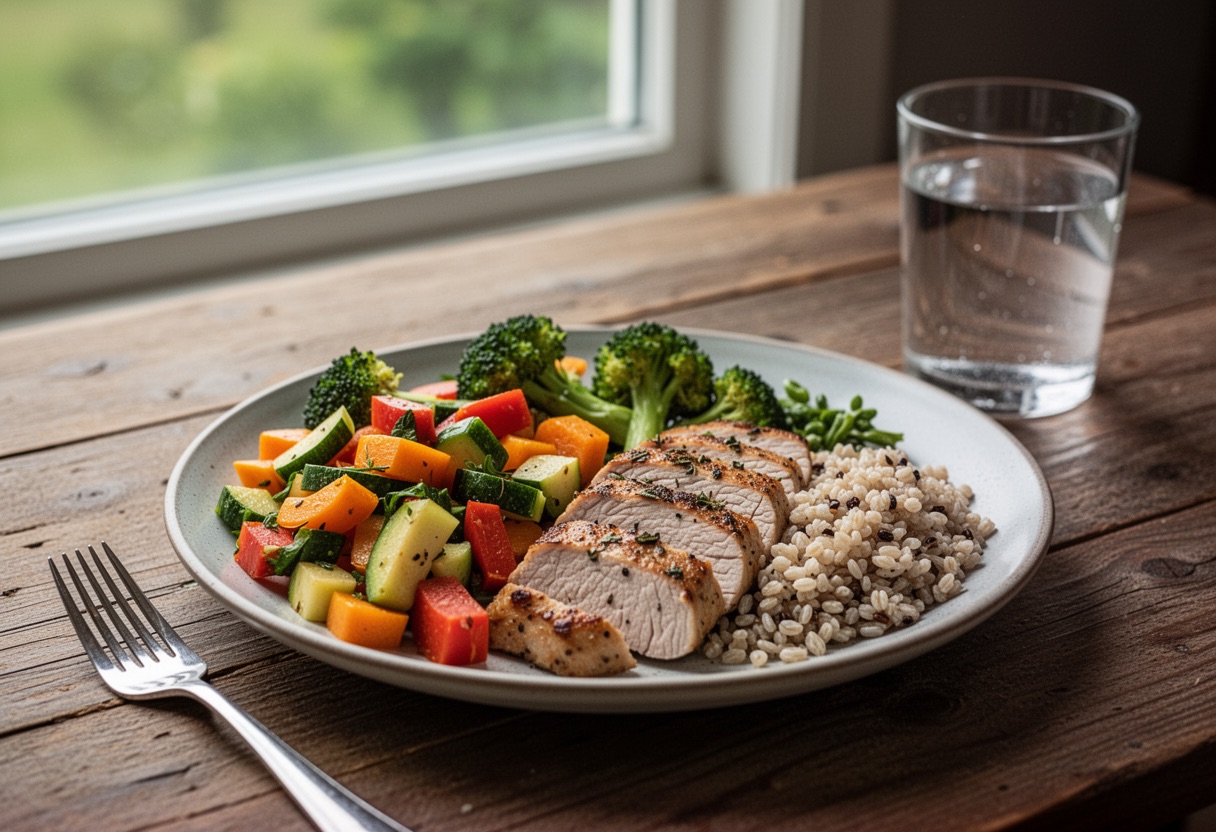
Tryptophan is the amino acid precursor to serotonin. Foods rich in tryptophan include turkey, chicken, eggs, cheese, nuts (especially cashews and almonds), seeds (pumpkin, sesame), tofu, and fish. Tryptophan requires adequate vitamin B6, folate, and iron to be converted into serotonin, so ensuring these nutrients are sufficient matters.
Complex carbohydrates help tryptophan cross the blood-brain barrier by triggering insulin release, which clears competing amino acids. This is one reason people sometimes feel calmer after eating carbohydrate-rich meals.
Anti-inflammatory foods are important because neuroinflammation appears to be involved in OCD. Omega-3-rich fish, colourful fruits and vegetables (rich in polyphenols), turmeric, and extra-virgin olive oil all have anti-inflammatory properties.
Avoiding alcohol is particularly important for OCD. While alcohol may temporarily reduce anxiety, it disrupts serotonin metabolism, worsens sleep quality, and often leads to worse OCD symptoms the following day. Many people with OCD notice a clear pattern of worsened obsessions and compulsions after drinking.

Sleep Optimisation
Sleep disruption and OCD have a well-documented bidirectional relationship. Poor sleep increases anxiety, reduces the prefrontal cortex's ability to regulate emotional responses, and worsens OCD symptoms. OCD, in turn, can make it difficult to fall asleep — the brain continues generating obsessions and demanding compulsions precisely when you are trying to wind down.
Specific strategies for OCD-related sleep disruption:
Set a firm "OCD curfew." Choose a time (ideally 1-2 hours before bed) after which you refuse to engage with OCD. If an obsessive thought arises, acknowledge it with "I'll deal with that tomorrow" and redirect attention. This is, in essence, informal ERP practice.
Avoid checking behaviours at night. If you have checking compulsions (locks, appliances, alarms), do your evening check once — and only once — well before bedtime. Using a phone to photograph that the door is locked or the stove is off can provide a reference point without requiring repeated checking.
Progressive muscle relaxation before bed can help release the physical tension that OCD generates throughout the day.
Consistent sleep timing supports circadian rhythm stability, which in turn supports serotonin regulation.
Yoga for OCD
Yoga combines physical movement, breath regulation, and mindfulness — all three of which are independently beneficial for OCD. A study published in the Indian Journal of Psychiatry found that Kundalini yoga (which emphasises breathing techniques) significantly reduced OCD symptoms compared to a relaxation control condition.
The breathing component may be particularly important, as it directly stimulates the vagus nerve and activates the parasympathetic nervous system, counteracting the chronic state of anxiety that fuels the OCD cycle.
However, an important caveat: yoga should not become another compulsion. Some people with OCD develop rigid rules around their yoga practice — it must be done at exactly the right time, for exactly the right duration, in exactly the right way. If yoga is generating anxiety rather than reducing it, this pattern needs to be addressed.
When SSRIs Are the Right Choice
This article focuses on natural approaches, but responsible guidance requires acknowledging that SSRIs are often an essential component of OCD treatment, particularly for moderate-to-severe cases.
OCD typically requires higher SSRI doses than those used for depression — often at the maximum recommended dose. This is because OCD involves different serotonin pathways than depression, and higher doses are needed to affect the circuits involved. It also takes longer to see results — often 8-12 weeks at a therapeutic dose, compared to 4-6 weeks for depression.
There is no virtue in suffering without medication when medication could help. The most effective approach for many people is combined ERP therapy and SSRI treatment, supplemented with the natural strategies discussed in this article. The natural approaches can improve areas that medication does not fully address (gut health, sleep, exercise, stress management) and may allow lower medication doses over time.
For complementary support with anxiety management, see our resource on scalar energy and anxiety.

Scalar Energy as a Complementary Approach
For those seeking additional holistic support alongside their OCD management plan, scalar energy therapy offers a non-invasive complementary option. While it does not treat OCD directly, users often report improvements in overall anxiety levels, sleep quality, and a greater sense of calm — all of which can create a more favourable foundation for OCD recovery.
Scalar energy works with the body's natural biofield to promote physiological coherence and balance. It requires no effort from the recipient and does not interfere with any medications or therapy protocols.
If you are interested in exploring scalar energy as part of your wellness approach, you can start a free trial here.
Frequently Asked Questions
What is the best natural treatment for OCD?
Exposure and Response Prevention (ERP) therapy is the most effective treatment for OCD, natural or otherwise. It works by gradually exposing the person to their obsessive triggers while preventing the compulsive response, which retrains the brain's fear circuits over time. Among supplements, N-Acetylcysteine (NAC) at 2400-3000 mg per day has the strongest evidence, with multiple clinical trials showing significant reductions in OCD symptoms when used alongside standard treatment. Inositol at high doses (up to 18 grams per day) has also shown promise. Exercise (particularly aerobic exercise for 20-40 minutes, 3-5 times per week) can meaningfully reduce OCD symptoms. The most effective natural approach combines ERP therapy with exercise, stress management, good sleep, and targeted supplementation.
Can OCD go away without medication?
Yes, OCD can significantly improve without medication. ERP therapy alone is effective for many people, with response rates of 50-70% — comparable to SSRIs. Some people achieve near-complete remission through therapy combined with lifestyle modifications. However, OCD severity varies enormously. For moderate to severe OCD, SSRIs (particularly at higher doses) are often an important part of treatment, and there is no reason to avoid them if they are needed. Many clinicians recommend starting with combined ERP therapy and medication for moderate-to-severe cases, then exploring whether medication can be tapered once the person has developed strong ERP skills. Mild OCD often responds well to therapy and lifestyle changes alone.
Does NAC really help with OCD?
The evidence for N-Acetylcysteine (NAC) in OCD is encouraging. NAC modulates glutamate, a neurotransmitter increasingly recognised as playing a central role in OCD alongside serotonin. A double-blind, placebo-controlled trial published in the Journal of Clinical Psychopharmacology found that adding 2400 mg of NAC per day to standard SSRI treatment significantly improved OCD symptoms compared to placebo. A systematic review confirmed these findings. NAC is generally well-tolerated with mild side effects (usually gastrointestinal). It is not a replacement for ERP therapy or SSRIs in moderate-to-severe OCD, but it is one of the most promising adjunctive supplements available. Results typically take 8-12 weeks to become apparent.
How does the gut affect OCD symptoms?
The gut-brain axis plays a significant role in OCD. About 95% of the body's serotonin is produced in the gut, and serotonin dysregulation is central to OCD. Research has found that people with OCD often have altered gut microbiome composition compared to healthy controls. Gut inflammation can increase brain inflammation through the vagus nerve and circulating cytokines, potentially worsening OCD symptoms. Some researchers have identified a subtype of OCD called PANDAS (Pediatric Autoimmune Neuropsychiatric Disorders Associated with Streptococcal infections) where gut-immune-brain interactions directly trigger OCD symptoms. Supporting gut health through a diverse, fibre-rich diet, fermented foods, and reducing processed food intake may help reduce OCD symptom severity as part of a broader treatment approach.
The information in this article is intended for general wellness and educational purposes only. It is not medical advice and does not replace consultation with a qualified healthcare professional. If you are in crisis, please contact emergency services or a crisis helpline immediately.