
If you are over sixty and you sleep badly, you have almost certainly been told that the problem is a habit. Go to bed at the same time. Get up at the same time. No screens. No coffee after two. Keep the room cool.
You have done all of it. Some of it helped a little. None of it explained why you are awake at three in the morning with a mind that is entirely awake and a body that would very much like to be asleep.
That experience has a pattern, and the pattern deserves a name.
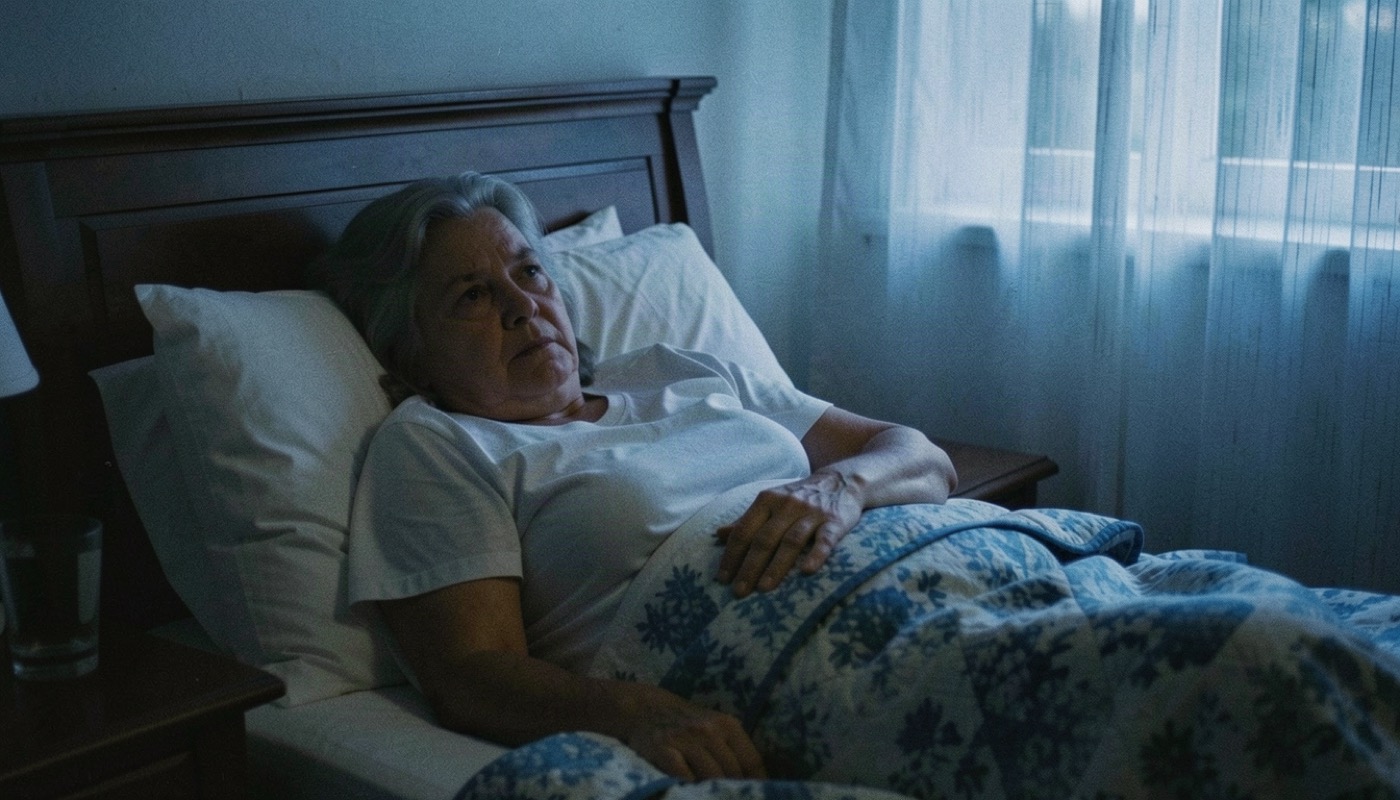
The pattern has a name
Call it the three-in-the-morning pattern, because that is where it announces itself. It has three parts, and if you have two of them you will recognise the third.
- You fall asleep without much trouble. Getting to sleep was never the problem. That is the part people find hardest to explain to a doctor, and it is the reason the standard advice sounds like it was written for somebody else.
- You wake between two and four. Not with a start, not from a noise. You simply surface, and the night is over.
- The mind is already at work when you arrive. Not anxious, exactly. Employed. Making lists, replaying a conversation, planning a Tuesday.
None of them is discipline. None of them is a habit you failed to build.
You did not fail at sleep. You woke up inside a pattern that has a shape, a time, and a level underneath it.
Why it is not willpower
The willpower story is attractive because it makes the problem temporary. If it is a habit, then a better habit fixes it, and the only thing standing between you and a full night is a decision.
But a decision cannot change the architecture of a night. Sleep after sixty is lighter — the deeper stages take up less of it, and the transitions between cycles are more frequent. That is a change in the structure of sleep, not in the person having it.
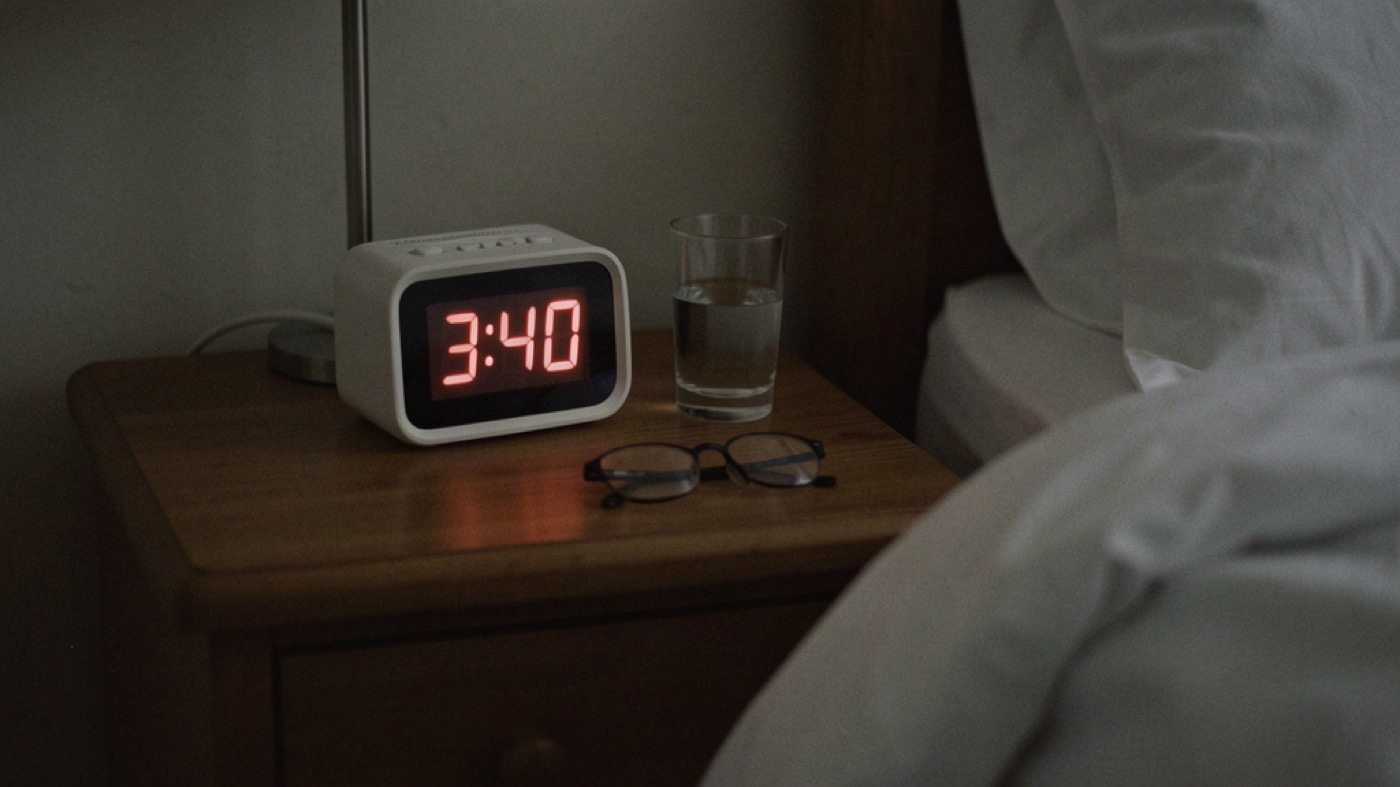
What actually changes after sixty
Three things, and only one of them is the one you have been told about.
The night gets shallower. Lighter sleep means more awakenings, and an awakening at three is not the same event as an awakening at eleven: at three there is no sleep pressure left to pull you back under.
The clock moves. Circadian timing shifts earlier with age, which is why you are tired at nine and awake at five, and why an early bedtime quietly guarantees an early wake.
The state underneath gets ignored. This is the one nobody adjusts. Every intervention on offer — the light, the timing, the temperature, the tablet — acts on the night. The baseline the night is built from is not on the list.
Why the pattern survives everything you try
Because every remedy is aimed at the same level.
The lamp changes the signal. The tablet changes the transition. The routine changes the conditions. All three act on the night as an event, and the night as an event is the downstream end of a state you have not touched since your forties.
You have been adjusting the conditions of sleep. Nobody has adjusted the level it is built on.
What the broadcast does, and what it does not
Once a day, at a fixed hour, one emission is sent for a list of names — the field, not the body. You send a name, a date of birth, a city, and you are on that list. Nothing arrives in a box, nothing is worn, nothing is swallowed.
It does not change the architecture of an ageing night, and we are not going to pretend otherwise. What it addresses is the level underneath: the state the night is produced from, which is the one thing on this page that is not already being sold to you by somebody else.
The evidence you get is deliberately unglamorous: an email each morning with the date and the broadcast number, so you can check that it ran rather than deciding whether you felt something.
What people actually report
The accounts below come from the book, published as written, with permission and names withheld. They are reader experiences, not product reviews, and they are not evidence of a result.
I have woken at three for fifteen years and I had accepted that this was simply what my body did now. What changed was not the hour I woke. It was that I stopped lying there arguing with it. The arguing was costing me more than the waking.
What it costs, exactly
Six days free, no card. Then $2.99 for the first month, $9.99 a month after that — 33 cents a day. Or $99 a year, which is $8.25 a month. Or $299 once, covering thirty months. Refundable for fourteen days; one reply takes you off the list.
See the plans and how the broadcast works →
Questions worth asking
Should I see a doctor first?
Yes, if the pattern is new, if you snore heavily, if you wake gasping, or if you are exhausted during the day. Those are reasons for an assessment, not for a subscription. This page is not a diagnosis and cannot be one.
Is this just something to buy because I am tired?
Possibly, and you should hold that thought. The reason the trial asks for no card is that we would rather you found out for six days at our expense than talked yourself into a year.
What if nothing happens?
Then nothing happens, and you will have spent six days and no money. Feeling nothing is the expected outcome of a practice this subtle; the record is what tells you whether it ran.
This article is for information only and is not medical advice. It does not diagnose, treat, cure or prevent any condition. Persistent sleep problems deserve a doctor's assessment; CBT-I is the best-evidenced first-line treatment for chronic insomnia. Individual experiences vary and nothing here is a promise of a result.